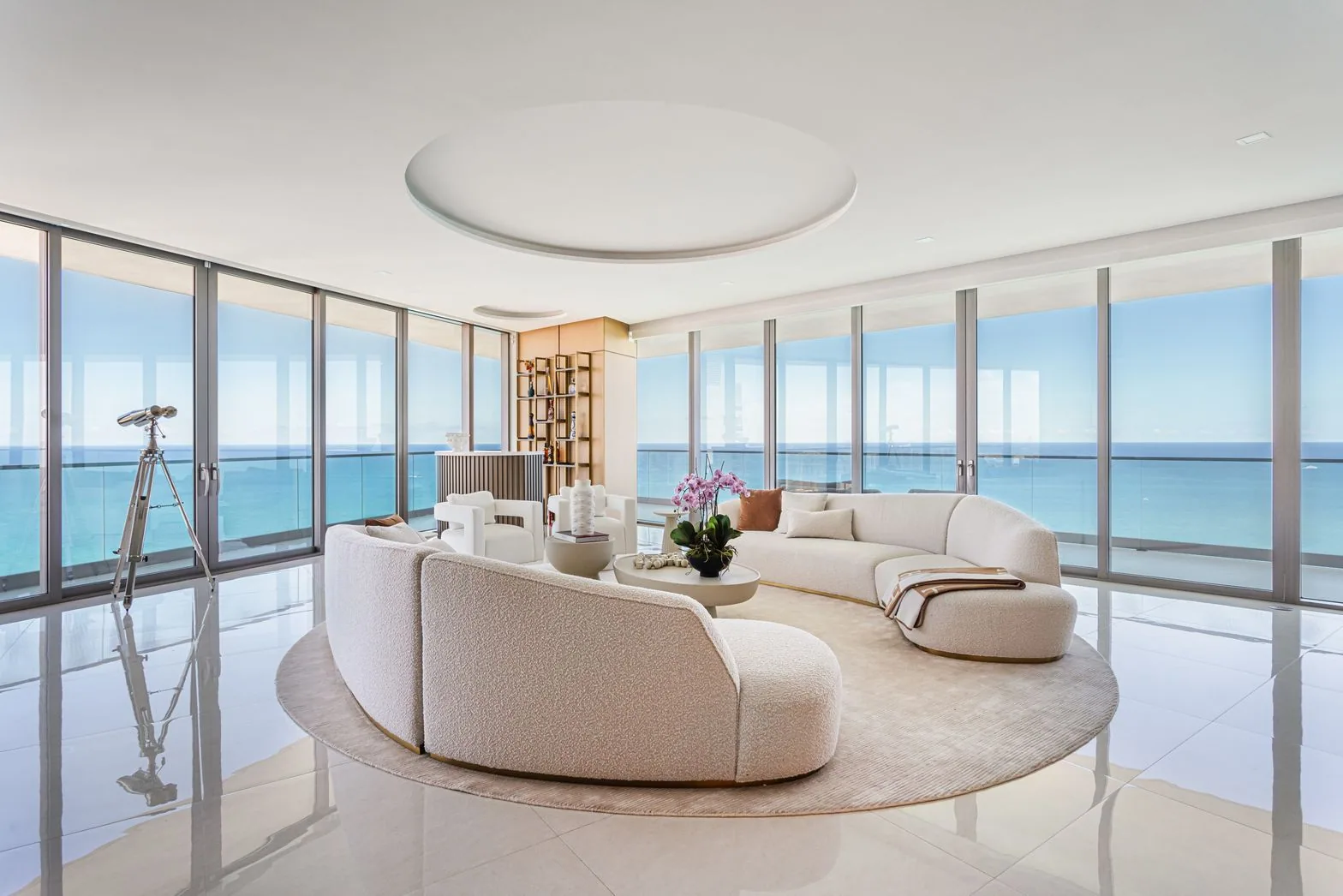
Pre-construction is one of the most exciting moments in luxury real estate, and one of the most misunderstood when it comes to interior design. Buyers spend months negotiating the price per square foot, the floor and the parking, then treat design as something that happens later, once the keys arrive.
That sequence is backwards.
The window in which a designer can do the most for you, at the lowest added cost, opens before the building is finished, sometimes before it is fully framed. Miss it, and you will spend significantly more after delivery to achieve what you could have had built in from the start.
This article maps the timeline: what happens at each stage of a pre-construction purchase, which decisions close permanently, and exactly when to make the call.
Why pre-construction is different from a resale
When you buy a finished unit, you work with what exists. The walls are where they are. The plumbing is where it is. Every change requires demolition, permits and time.
When you buy pre-construction, you are buying before any of that is fixed. The building is a set of drawings and a promise. Inside those drawings there is a narrow window, set by each developer and usually measured in months, sometimes in weeks, during which your designer can influence decisions that will otherwise be made by default, without you.
That window does not stay open. Once the concrete is poured, the plumbing is roughed in and the floors are laid, it closes. And everything that closes without your input becomes a constraint you will live with for as long as you own the home.
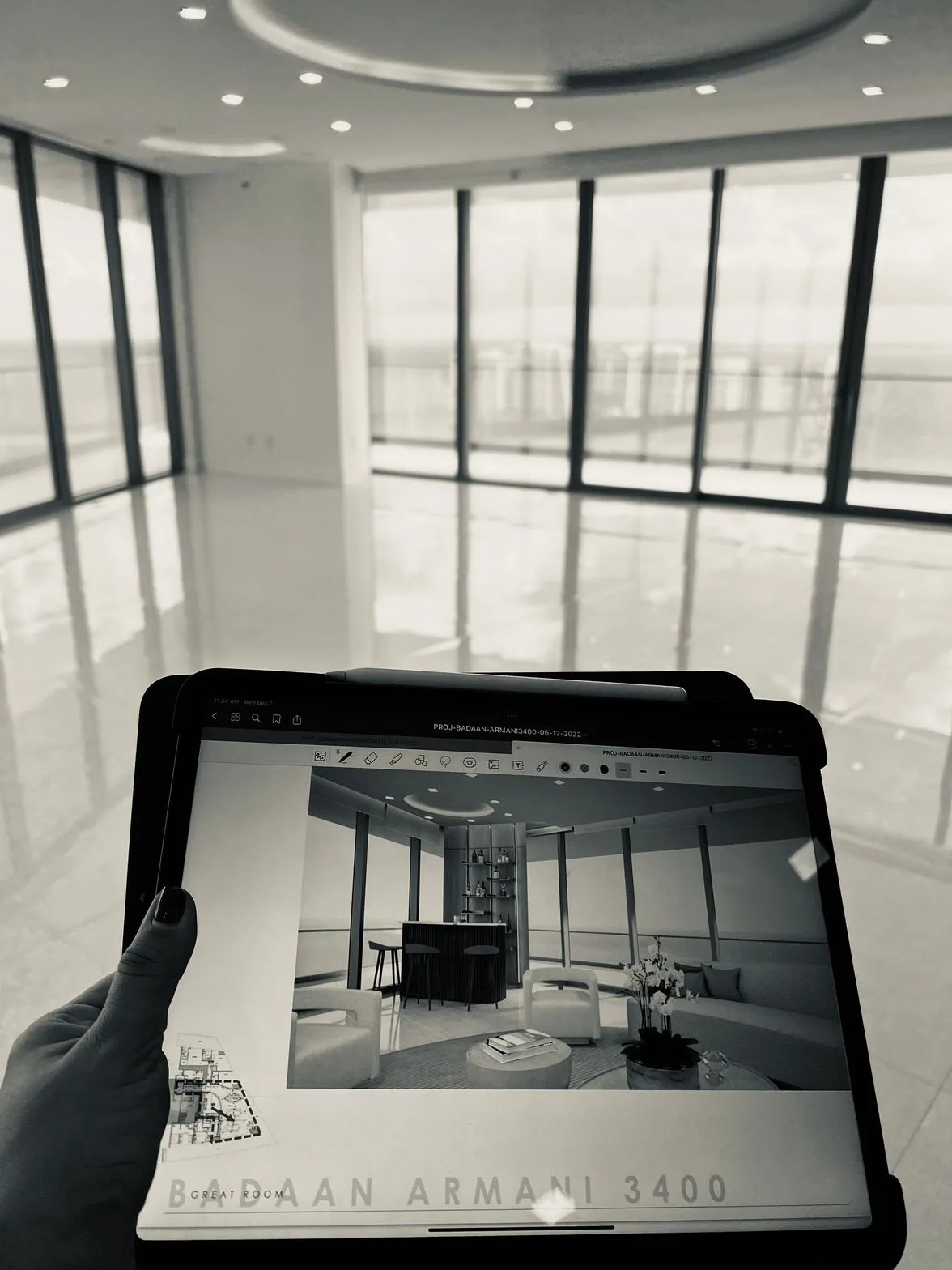
The four stages of a pre-construction project
Every pre-construction purchase moves through roughly the same sequence, and the designer's role changes at each stage.
- Before you sign the contract. The negotiation window. Buyers rarely use it; it is almost always worth using with a designer.
- The design center appointment. The developer's structured selection process. The most visible moment and, if you arrive without a designer, the riskiest.
- During construction. Site visits, change requests and coordination with the developer's team. This stage takes technical knowledge to navigate.
- After delivery. The work most people think of as "the design." By this point, the structural decisions are fixed.
The earlier you bring in a designer, the more stages they can shape. But even starting at stage two produces a significantly better result than waiting for stage four.
Stage one: before you sign the contract
Most buyers don't think about a designer at this point. They are thinking about price, floor and orientation. Design feels premature.
It isn't.
A designer who reviews the floor plan and the finish schedule before you sign can identify two things most buyers miss entirely. (The legal review of the contract belongs to your attorney; the review of the space belongs to your designer.)
What can be changed, and what can't. Developers list standard finishes and standard layouts. They don't always advertise that some of those defaults can be modified, or that certain changes are only accepted if requested before a specific construction milestone. A designer who has worked in that building, or in buildings at a similar stage, knows what to ask and which changes are usually approved.
What the floor plan will really cost to finish the way you imagine it. A floor plan is not a furnished home. The space your broker describes as 3,200 square feet will need furniture at a specific scale, specific wall treatments and specific lighting to feel the way you picture it. A designer can tell you whether the plan supports your vision, or whether you are buying a layout that will fight you at every step.
This consultation takes a few hours. On a $3M purchase, those are some of the highest-leverage hours you can spend.
Stage two: the design center appointment
This is the moment most buyers experience as "the design part" of a pre-construction purchase. The developer's design center presents options for flooring, cabinetry, countertops, plumbing fixtures and sometimes appliances. You make selections. You sign off. You leave thinking the design is done.
It isn't done. It has barely started. But several decisions you made in that appointment will be permanent.
What the design center is
It is the developer's curated selection of finishes within your contract. The options are real, the quality range is often wide, and upgrades cost real money. In a luxury building, a full upgrade package can run from $50,000 to $300,000 or more, depending on the building and the scope of the selections.
What the design center is not
It is not a design consultation. No one in that room is thinking about how your selections relate to one another, how the light falls in your specific unit on your specific floor, or how the finish you are choosing for the kitchen will look next to the floor you just picked for the living room. They are there to process selections, not to design.
If you go without a designer
You decide under time pressure, often in a single appointment, from samples that look nothing like they will in your actual space. You choose what looks beautiful on its own in a showroom. You leave with a set of defaults that are fine, and a finished home that looks like everyone else's in the building.
If you go with a designer
Your designer has already studied your floor plan and your unit's orientation before the appointment. They know what natural light your unit gets, and when. They know that the dark stone you love will absorb too much light on a northeast exposure. They have already decided which upgrades are worth the premium and which are not. They negotiate changes where the developer allows them. The appointment becomes a confirmation, not a discovery.
I have accompanied clients through design center appointments for units at Acqualina, Armani Residences and similar buildings. The difference between a prepared client and an unprepared one isn't taste. It's information.

Stage three: during construction
Once selections are made, most buyers step back and wait for the call that says the unit is ready.
A designer doesn't step back.
The construction phase, which in luxury towers often runs two to four years from purchase to delivery, is when decisions made on paper meet physical reality. That process produces surprises. Some are small. Some are not.
Change requests. If your designer identified modifications the developer agreed to consider, those requests need to be tracked, submitted on time and followed through the developer's approval process. Missing a change window means the modification doesn't happen.
Coordination with the developer's contractor. For larger customizations, such as a relocated kitchen island, a reconfigured bathroom or a different ceiling treatment, the developer's team needs drawings from your designer that meet their technical requirements. That takes someone who speaks that language.
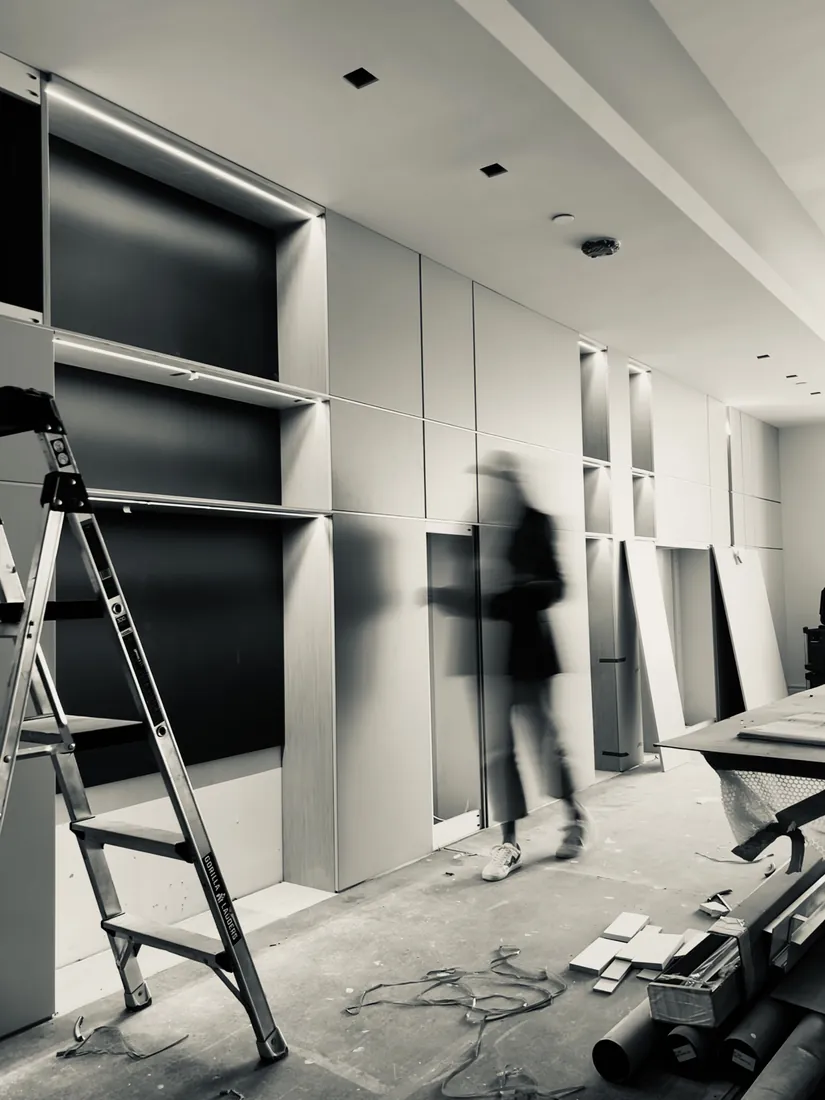
Site visits at key milestones. Before the walls close, before the floors go down and before the ceilings are finished, there are moments when a designer can catch a problem before it becomes permanent: a ceiling height that doesn't match the drawings, a plumbing rough-in in the wrong place. These are fixable before finishes go in. They aren't after.
The pre-delivery walkthrough. Your designer should walk the unit before you accept it from the developer, punch list in hand. Developers are used to working with represented buyers, and the result is that more items get resolved before you take possession.
Stage four: after delivery
This is when most buyers call a designer for the first time. The unit is delivered, the keys are handed over, and now, finally, it is time to design.
Everything that was going to be built in is already built. The floor is what was selected. The kitchen is as specified. If you upgraded to the wrong stone, it's there. If the developer's standard lighting plan doesn't work for the way you live, you are now rewiring a finished ceiling.
The work that happens in stage four is real and important. Furniture, art, rugs, window treatments, added custom millwork, integrated lighting upgrades: there is still substantial design to do. But it costs more than it would have, because you are now working around fixed decisions instead of informing them.
Bringing in a designer at stage four isn't a mistake. It's the most common entry point, and the work still transforms the space. But a designer who enters at stage two or earlier is building something different: a home where every layer was considered in sequence, not installed on top of a set of unrelated defaults.
The decisions you can't undo
Some choices in a pre-construction purchase are permanent, or effectively permanent. They deserve particular attention.
- Flooring. In most luxury buildings, the developer's flooring is installed throughout the unit as a single scope of work. Changing it after delivery means removing and replacing the entire surface, with the cost, noise and disruption of a demolition project in a finished building.
- Kitchen and bathroom tile. Once installed and grouted, changing it is a full remodel.
- Plumbing rough-ins. Where the pipes were placed determines where fixtures can go. Moving a rough-in in a completed tower requires coordination with the building's engineering team and sometimes with other units. It isn't impossible, but it is expensive.
- Ceiling heights and soffits. In units with custom ceiling modifications approved during construction, the height and configuration become fixed once finished.
- Developer-supplied appliances. In most pre-construction purchases they are part of the developer's package and, unless the contract provides for it, can't be removed or swapped.
Knowing which of these are in play, and which can still be redirected, before you make your selections is what separates a well-designed pre-construction purchase from one that costs twice as much to correct.
What a designer actually does on a pre-construction project
The scope depends on when the designer comes in, but a full pre-construction engagement at Lacruz Design Studio includes:
- Floor plan and finish schedule review. Before you sign, we review the plan for spatial feasibility, natural light and potential layout changes. We identify which changes to request and which defaults to accept.
- Design center preparation and attendance. We prepare a complete selection guide before the appointment, attend with the client, and make decisions in the room that align with the full design concept, not just the finish samples on the table.
- Change request submission and follow-up. We submit modification requests to the developer's team within their deadlines and follow them through to approval or rejection.
- Construction coordination. We attend site visits at key milestones, check the work against the drawings, and flag issues before finishes cover them.
- Pre-delivery walkthrough. We inspect the unit before you accept it, prepare the punch list and coordinate resolution with the developer.
- Full interior design and installation. After delivery, we complete the furniture, lighting, art and soft-goods program that turns a finished unit into a finished home.
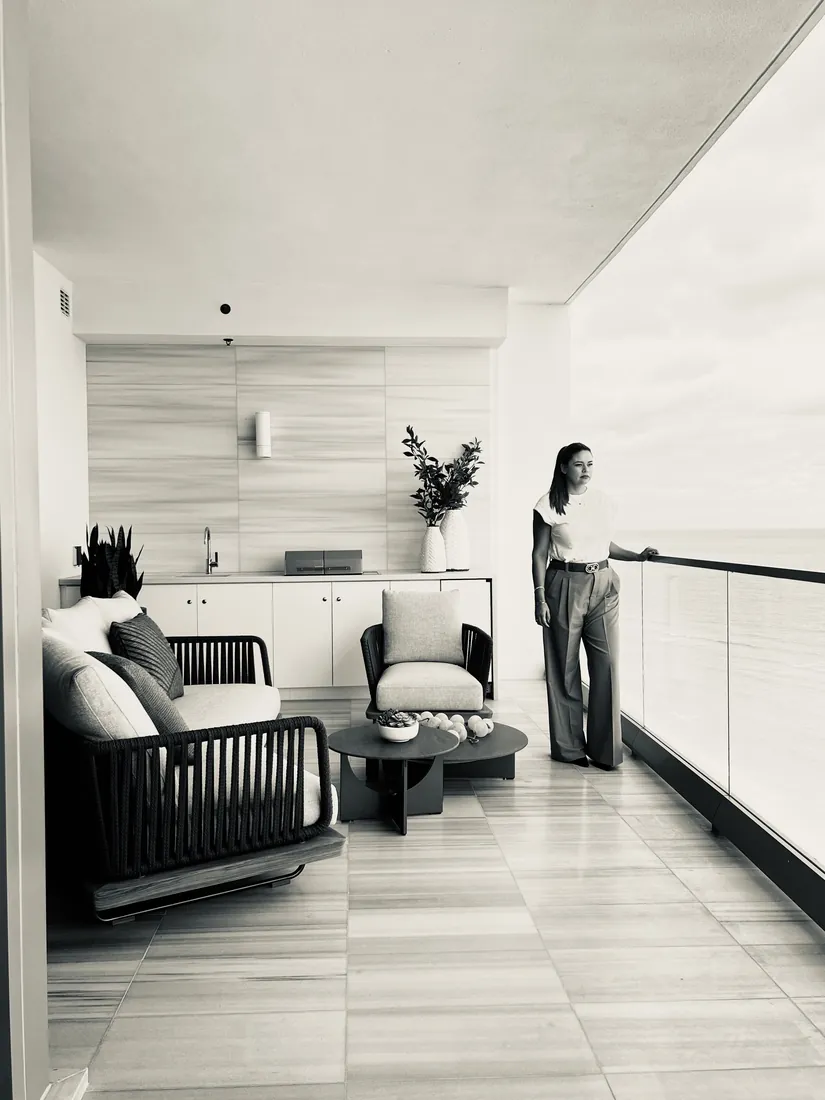
How to find the right designer before your building is finished
The best time to hire is before the design center appointment: ideally before you sign, but the design center appointment is the deadline. After that, a designer can still add significant value, but the most important decisions will already be made.
When evaluating designers for a pre-construction project, ask:
- Have you worked on pre-construction buildings before? Specifically: have you attended design center appointments, submitted change requests or coordinated with a developer's construction team? It is a specific skill set, and experience matters.
- Do you know this building or this developer? Every developer has different processes, deadlines and flexibility on modifications. A designer who has worked with the same developer knows what is possible and what isn't.
- What does your pre-construction scope include? Some designers charge separately for design center attendance and pre-delivery walkthroughs. Others include them in a full engagement. Know what you are buying.
- Can I see a pre-construction project you've completed? Finished and lived in, not rendered. The design center choices and the finished home should read as one decision, not two separate events.
For everything else worth asking before you hire, read How to Choose a Luxury Interior Designer: A Complete Guide.
For buyers at Acqualina, Armani Residences and similar buildings in Miami and Sunny Isles Beach, our studio knows these processes firsthand; you can see our residential projects here. If you are in the pre-construction phase and want to understand what is still possible for your unit, request a private consultation with me directly. I review every inquiry personally, and you will hear from me within 48 hours.