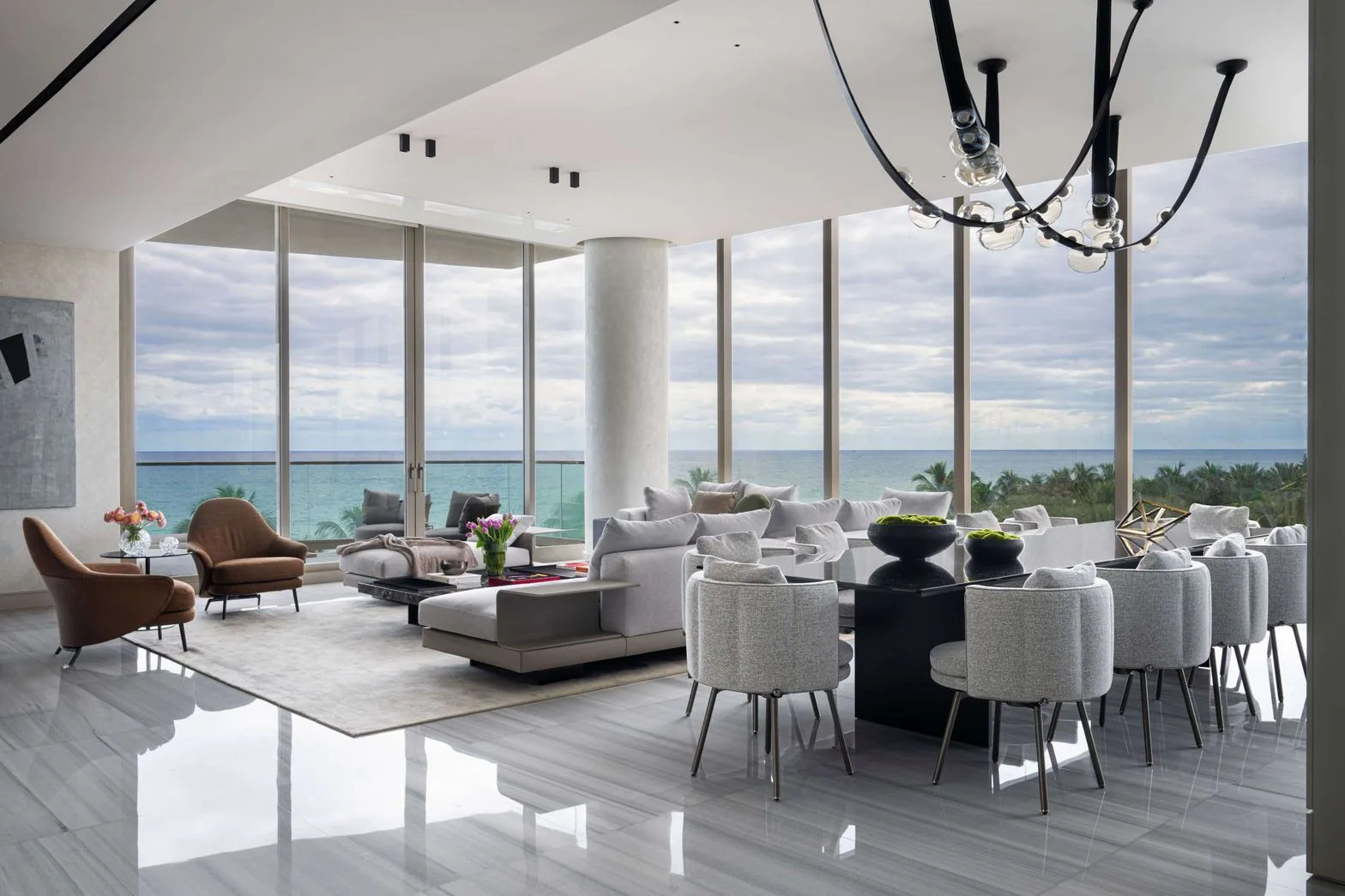
Choosing a luxury interior designer is rarely a question of taste. By the time you start looking, you have already seen hundreds of beautiful rooms. The harder question is who will actually make the next five hundred decisions about your home and whether you will ever see them again after the contract is signed.
I have seen this from both sides. For years I was Creative Director at one of Miami's most recognized luxury design firms. Today I lead my own studio, and we take six projects a year. This guide is what I would tell a friend before they hire anyone, including me.
What does a luxury interior designer actually do?
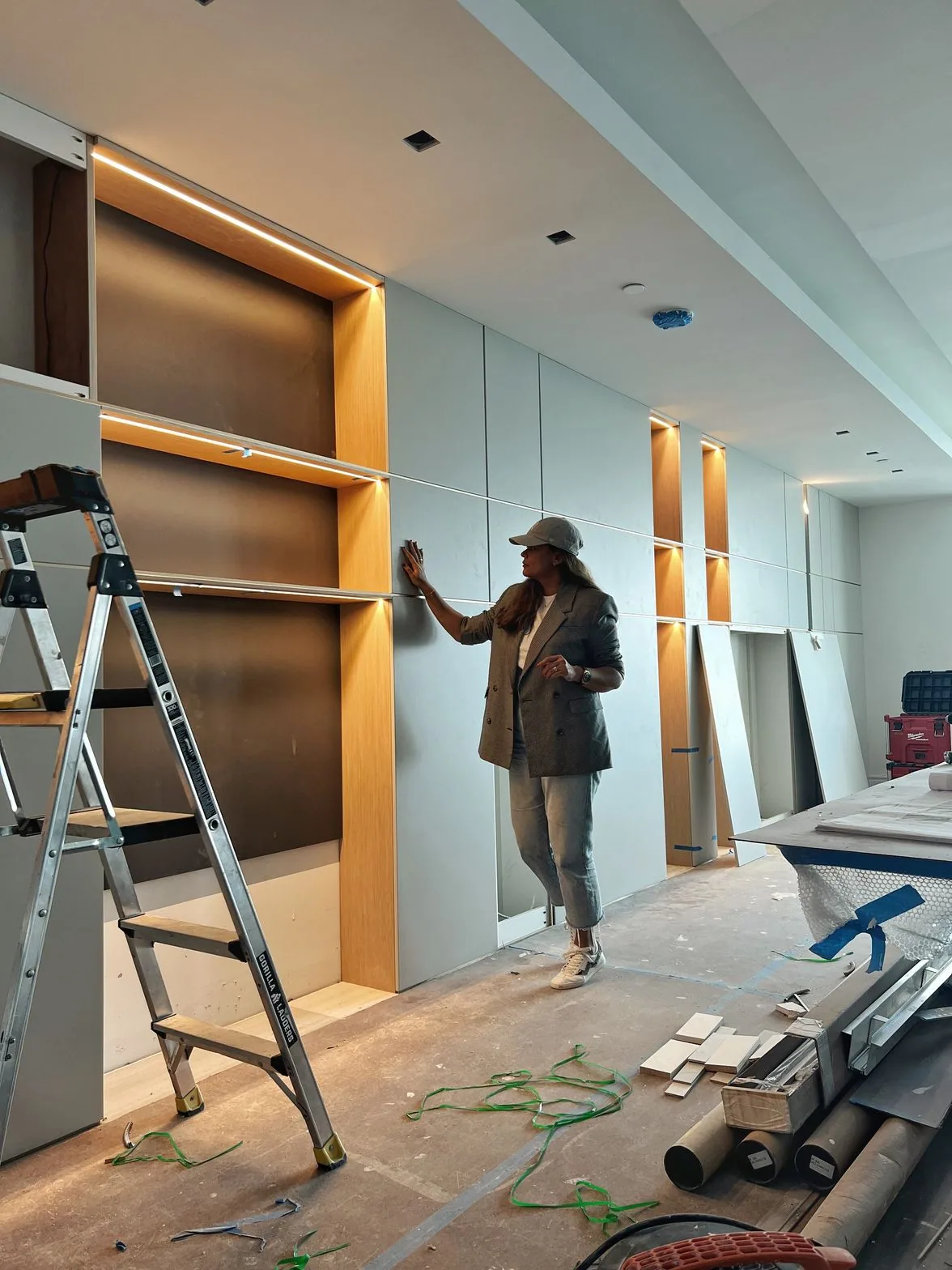
Selecting furniture is the smallest part of the work. A full-scope luxury interior designer plans how the space is used, draws the custom millwork, designs the lighting, specifies every material down to the stone slab, and coordinates with your architect and contractor so that what was drawn is what gets built. Then come procurement, installation, and the final styling that makes a finished house feel inhabited rather than staged.
That is the difference between a designer and a decorator. A decorator works with what exists: furnishings, fabrics, surface finishes. A designer is responsible for the architecture of the interior itself. On our Seabreeze full renovation in Miami, that meant nine areas, Calacatta marble, custom millwork and a complete lighting design, all of it drawn, specified and supervised by the studio.
Before you compare designers, decide which of those you need. If you are renovating or building, you need a designer who can produce construction-ready drawings and hold their own in a room with a general contractor.
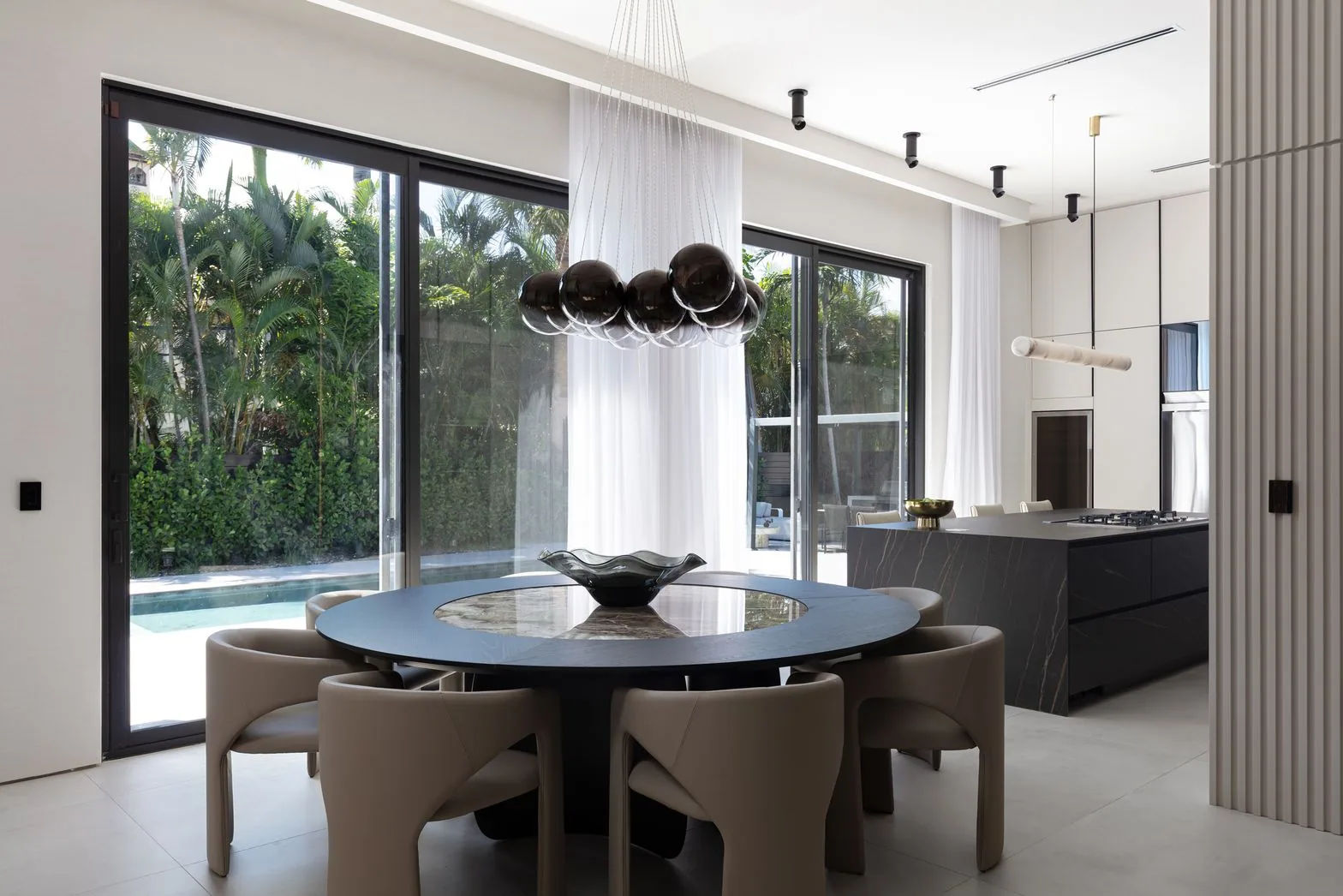
Credentials, and what they really mean
On residential projects, many people who call themselves interior designers hold no formal qualification at all, and in many states, including Florida, residential work does not require a license. That is exactly why it is worth asking what credentials a designer holds, and what it took to earn them.
NCIDQ certification
The NCIDQ is the professional qualification for interior designers in North America. To sit for it, a designer needs a combination of formal education and supervised professional experience, and the exam covers building codes, construction standards, life safety and professional practice. It does not measure taste. It measures whether someone can be trusted with the technical side of your home.
Education and experience
Ask where the designer trained and what they did before they led their own projects. My own path went through architecture first, a Bachelor in Architecture from Universidad Simón Bolívar, then a Master in Interior Architecture through FIU and IED España, and then more than fifteen years in practice. An architectural foundation matters most when a project involves moving walls, rebuilding kitchens or designing lighting from scratch.
Press and recognition
Publications are not a credential, but they are an independent signal: an editor chose that work over hundreds of submissions. Look at where the work was published, and whether it was the designer's own project rather than one from a firm they once worked for.
Who will actually design your home?
This is the question almost nobody asks, and it is the one that matters most.
At the firm where I was Creative Director, I ran the projects and held the client relationships. And I watched clients feel something I could not fix from inside that organization. They had hired a named principal. They paid for that principal. After the first meeting, they never saw her again. The work went to a project manager and a team of junior designers, and the person whose portfolio had convinced them was gone.
You are not hiring a portfolio. You are hiring the person who will make the next five hundred decisions about your home.
That is not a criticism of large firms. Some clients genuinely prefer a larger team. But you should know which one you are buying before you sign. Ask directly:
- Who will I meet with after the contract is signed, and how often?
- Who makes the final design decisions?
- Who will be on site during construction and installation?
- How many active projects is the principal leading right now?
That last question is why my studio takes six projects a year. It is not a capacity limit. It is the number at which I can be personally present in every decision, from the first conversation to the final installation.
How to read a designer's portfolio
A portfolio shows you what a designer is capable of. Read it for evidence, not just mood.
- Built work, not renderings. Photographs of completed, occupied homes tell you the design survived construction. Renderings tell you it survived software.
- Full projects, not single rooms. Ask for the scope behind each image. A beautiful powder room and a twenty-one-space residence are different jobs.
- A point of view that adapts. You want a recognizable standard, but homes that belong to their owners. If every project looks identical, yours will too.
- The details. Look closely at transitions: where stone meets wood, how millwork meets the ceiling, where the light falls. That is where craft shows.
- Repeat and referred clients. Our Seabreeze project came as a direct referral from the owner of our Regalia Beach residence in Sunny Isles. A referral from a past client is the most honest review a designer can get.
Then ask to speak with one or two past clients. A confident designer will make the introduction. You can see our selected luxury residential projects in Miami and Sunny Isles Beach as an example of what complete project documentation looks like.
How much does a luxury interior designer cost?
Start with the numbers. At our studio, projects begin at $500,000 for soft renovation, furniture and curation, and at $1,000,000 for full renovation and construction. Those figures are the total investment in the home, not the design fee. If your budget sits well below them, a focused scope done properly will serve you better than a full renovation stretched thin. And if a studio working at this level cannot tell you its starting point, it has not decided who it is for.
There are two numbers in every project, and they are often confused: the total investment in the home, and the designer's fee.
The total investment
This is everything the design becomes: construction, stone, millwork, lighting, furniture, art, installation. Name this number early and honestly. Every decision after it depends on it, and a designer who does not ask for it in the first conversation is guessing.
A budget is not the enemy of ambition. On Ocean Gem at The Estates at Acqualina, the client set a $2.3M cap across twenty-one spaces. It was not a ceiling on the design. It was the parameter the design had to work inside, and the project has since been published internationally three times. A good designer will tell you plainly what your budget can achieve, and will not quietly let it drift.
The design fee
Luxury designers charge a flat design fee, hourly, a percentage of the project cost, a markup on what they purchase for you, or a combination. Any of these can be fair. What is not acceptable is a structure you cannot explain back to someone after the first meeting.
From a properly resourced practice, expect:
- The fee, and how procurement is billed, in writing before design begins.
- A direct answer on whether trade pricing is passed on to you, and what markup, if any, applies.
- A defined process for what happens to the fee when the scope grows.
- The name of the person who will lead your project, written into the agreement.
Ask more questions when you see:
- A fee far below the others you have been quoted. At this level, a low fee is usually paid for with less senior time on your project.
- Markups that appear only on invoices.
- A proposal that arrives before anyone has asked how you live.
The right fee is the one that pays for the person you hired to be present for every decision. That is what you are buying.
How long does a luxury interior design project take?
Longer than most people expect, and shorter than most people fear, if decisions are made well. A full project moves through recognizable phases: discovery, concept, design development and drawings, procurement, construction, and finally installation and styling.
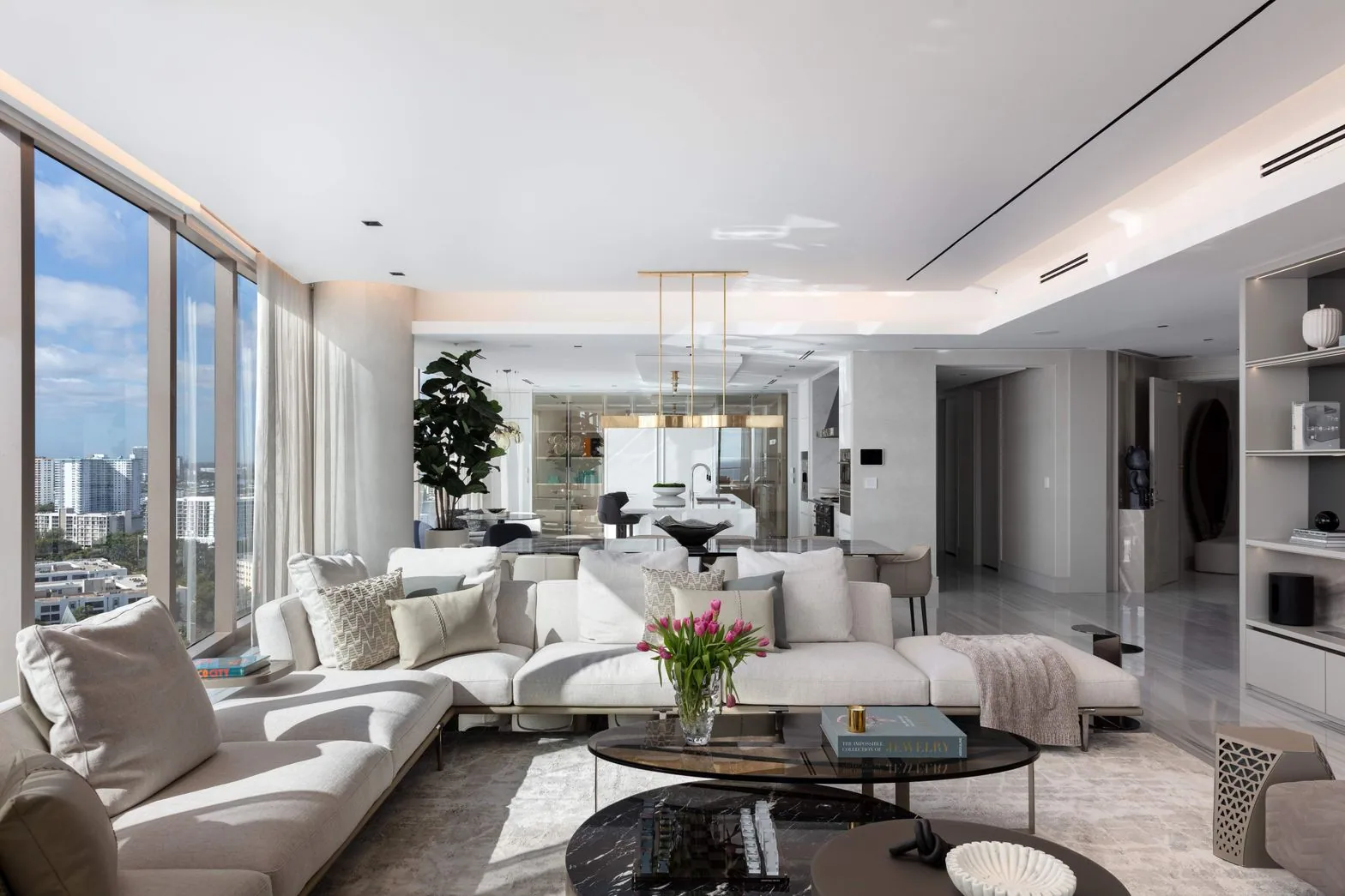
Two of our projects show the range. Acqualina 504, five spaces, took one month of design and three months of execution. Seabreeze, a full renovation of nine areas, took eight months. The difference was not effort. It was scope: how much was being rebuilt, and how much was custom.
Three things decide your timeline more than anything else:
- Construction scope. Moving plumbing, walls or ceilings adds months. Surface-level work does not.
- Custom pieces. Made-to-order furniture, stone and millwork have lead times that cannot be rushed, so they should be ordered as early as the design allows.
- Decision speed. A designer who presents clear options, and a client who is available to decide, can save more time than any contractor.
Questions to ask an interior designer before hiring
Take this list to every first meeting. The answers will tell you more than any portfolio.
- Who will lead my project day to day, and who will I see on site?
- How many projects are you leading right now?
- What are your credentials, and are you NCIDQ certified?
- Can I see a completed project similar in scope to mine, and speak with that client?
- How is your fee structured, and how are purchases billed?
- What total investment do you think my project needs, honestly?
- What is a realistic timeline, and what usually causes delays?
- Do you produce construction drawings, and how do you work with my architect and contractor?
- How will we communicate, and how quickly do you respond?
- What will you ask me about how I live before you design anything?
Red flags worth walking away from
- A vague answer to "who will actually work on my home?"
- A portfolio made mostly of renderings, or of single rooms rather than complete homes.
- No written scope, or a fee structure you still do not understand after asking twice.
- Reluctance to introduce you to past clients.
- Design proposals before anyone has asked how you actually live.
- Every project in the portfolio could belong to the same owner.
What a good first conversation feels like
The best first meeting is not a sales presentation. It is mostly questions, and most of them should be about you: how you live, who lives with you, how you entertain, what you want to leave behind from your current home and what you want to keep.
Every project in my studio begins with a single question: what do you want to feel when you walk through the door? The investment, the materials and the timeline all find their form from that answer. If a designer never asks you something like it, they are designing for their portfolio, not for your life.
If you are planning a residence in Miami, Los Angeles or New York and want to talk it through, request a private consultation with me directly. You will hear from me within 24 hours.